


Best overall for research-backed personality description: the Big Five. Best for examining Honesty–Humility: HEXACO. Best for spiritual reflection rather than scientific assessment: Archegram. This 2026 guide ranks personality frameworks by their research support and explains where a reflective diagram serves a different purpose from a psychological measure.
- Personality frameworks scientific validation: the Big Five leads this comparison for research-backed trait description.
- HEXACO adds Honesty–Humility, making it useful when that dimension matters to your question.
- MBTI and Enneagram interpretations need stronger qualifications than their familiar labels suggest.
- Archegram supports spiritual self-reflection through a 24-question quiz; it is not a validated diagnostic assessment.
Why this matters
A framework can give you useful language without providing scientifically validated conclusions. Recognizing yourself in a description does not establish that a questionnaire measures personality reliably or predicts behavior.
Archegram, also called Tantragram, belongs in this distinction. It is a contemporary, non-dogmatic adaptation of ancient Tantric knowledge developed at Samma Karuna. Its purpose is to support reflection on strengths, recurring patterns, inner balance and developmental needs—not to compete with established psychological research.
Choose evidence for measurement and a reflective framework for exploration. You do not need to confuse those purposes to benefit from either.
What makes a personality framework scientifically credible?
For this 2026 comparison, research support means more than popularity, an appealing diagram or a description that feels accurate. These criteria come before the ranking:
- Reliability: Does a particular questionnaire produce sufficiently consistent scores under appropriate conditions?
- Construct validity: Does evidence support the interpretation that its scores measure the proposed traits?
- Independent replication: Do researchers outside the framework’s originating organization find similar patterns?
- Relevant outcomes: Do scores relate to the behaviors or outcomes someone wants to understand?
- Appropriate scope: Does the framework distinguish descriptive findings from clinical, spiritual or predictive claims?
Validation belongs to a particular instrument, interpretation and use—not automatically to everything bearing a framework’s name. A short online quiz does not inherit the evidence behind a carefully developed research questionnaire.
Personality frameworks at a glance
The order below reflects research support for personality measurement among these selected options. It does not rank spiritual meaning or personal worth. The final entry is included to clarify the boundary, not to suggest that spiritual interpretation has been scientifically validated.
| Rank and framework | Best for | Standout feature | Key limitation |
|---|---|---|---|
| 1. Big Five | Broad, research-backed trait description | Continuous scores across five trait domains | Does not provide a spiritual development map |
| 2. HEXACO | Examining Honesty–Humility alongside other traits | Six-domain model with a distinct Honesty–Humility domain | Requires choosing an appropriate questionnaire and interpretation |
| 3. MBTI | Discussing stated preferences in familiar language | Accessible preference categories | Evidence does not justify treating types as fixed, sharply separated identities |
| 4. Enneagram | Reflecting on recurring motivations | Type-based vocabulary for examining patterns | Research support is mixed, with gaps around specific teachings |
| 5. Archegram | Spiritual reflection through a personal diagram | Connects archetypes, patterns and current inner balance | Not an established, validated psychological assessment |
1. Big Five: best personality framework for research-backed traits
The Big Five describes personality through openness, conscientiousness, extraversion, agreeableness and neuroticism. These are dimensions, so you receive a profile of degrees rather than membership in a single personality category.
The research overview by Oliver John, Laura Naumann and Christopher Soto, published in the Handbook of Personality: Theory and Research, explains the model’s development and measurement foundations. That scope supports its position here: describing broad personality traits, not explaining every aspect of a person.
Big Five pros:
- Extensive research literature supports the broad trait structure.
- Continuous scores avoid forcing everyone into sharply separated types.
- Established questionnaires make measurement methods open to scrutiny.
Big Five cons:
- Broad domains leave important personal context unexplained.
- Questionnaire quality varies; an online label alone proves nothing.
- Trait scores do not tell you what gives your life meaning.
Best for: You want an evidence-oriented description of broad tendencies before exploring their personal meaning.
For example, a conscientiousness score can prompt questions about planning and follow-through. It cannot explain why a particular commitment matters to you or settle what you should do next.
Verdict: Choose the Big Five for broad trait measurement; skip identity-defining interpretations.
2. HEXACO: best personality framework for Honesty–Humility
HEXACO describes six broad personality domains, including Honesty–Humility. That domain addresses tendencies involving sincerity, fairness, modesty and avoidance of exploiting others.
Michael Ashton and Kibeom Lee’s paper, Empirical, Theoretical, and Practical Advantages of the HEXACO Model of Personality Structure, in Personality and Social Psychology Review, presents the model’s research basis. Its relevance here is the evidence for a six-domain structure, not a claim that a questionnaire can judge someone’s moral worth.
HEXACO pros:
- Has an established empirical research foundation.
- Gives Honesty–Humility an explicit place in the profile.
- Uses dimensions rather than exclusive personality boxes.
HEXACO cons:
- Self-report answers still require thoughtful interpretation.
- Scores cannot establish someone’s trustworthiness in a specific situation.
- Its domains do not translate directly into spiritual archetypes.
Best for: Your question specifically includes fairness, sincerity or self-serving behavior alongside broader personality tendencies.
Keep the comparison fair. HEXACO is not simply the Big Five with an extra label; the organization of its domains also differs.
Verdict: Choose HEXACO when Honesty–Humility is relevant; skip using scores as moral verdicts.
3. MBTI: best personality framework for preference conversations
The Myers–Briggs Type Indicator organizes reported preferences into type categories. It offers familiar language for conversations about how you approach information, decisions and interaction.
Robert McCrae and Paul Costa’s Reinterpreting the Myers–Briggs Type Indicator From the Perspective of the Five-Factor Model of Personality, in the Journal of Personality, examines its relationship to trait dimensions. The distinction matters: relationships with traits do not establish that people fall into naturally separate, fixed types.
MBTI pros:
- Offers an accessible starting vocabulary for discussing preferences.
- Can prompt examples of how you approach everyday situations.
- Provides material for questioning assumptions about others.
MBTI cons:
- Type boundaries simplify differences that can be continuous.
- A category should not determine your career or relationships.
- A familiar label can encourage selective interpretation of experience.
Best for: You want a low-stakes preference conversation and understand the limits of type categories.
Instead of saying, “My type cannot handle this,” ask which part of the situation is difficult and what support would help. The example is more informative than the label.
Verdict: Hold MBTI lightly; skip using type as a decision rule.
4. Enneagram: best personality framework for motivation reflection
The Enneagram organizes reflection around nine personality types and their associated patterns. Its appeal lies in asking what motivates a response, rather than only describing the response itself.
Joshua Hook and colleagues’ The Enneagram: A Systematic Review of the Literature and Directions for Future Research, in the Journal of Clinical Psychology, reports mixed evidence for reliability and validity. The review also identifies limits in the evidence for parts of the wider teaching system. That does not support treating every interpretation as an established psychological finding.
Enneagram pros:
- Encourages questions about motives behind familiar behavior.
- Offers language for examining repeated reactions.
- Can structure journaling without requiring a clinical interpretation.
Enneagram cons:
- Evidence does not support all associated teachings equally.
- Identifying with a type can narrow your interpretation of yourself.
- A compelling explanation is not proof of its accuracy.
Best for: You want prompts about recurring motivations and are willing to question the interpretation.
Use a type description as a hypothesis: “Does this fit the situation?” Then look for an example that does not fit. Reflection becomes more useful when disagreement is allowed.
Verdict: Hold the Enneagram as a reflective lens; skip claims of settled scientific explanation.
5. Archegram: best personality framework for spiritual diagram reflection
This model combines a free 24-question quiz with a personal visual diagram for exploring archetypes, strengths, coping strategies and developmental needs. An archetype here is a recurring pattern used for reflection, not a fixed identity or diagnosis.
Its spiritual interpretation includes receptive and active energies, sometimes described as feminine and masculine. These are possibilities available to anyone, not prescriptions based on gender. The diagram invites you to consider your current balance and return to the reflection as circumstances change.
Strengths:
- Gives reflective conversations a shared visual reference.
- Connects personal insight with questions about your next step.
- Supports exploration without requiring prior Tantra knowledge.
Limitations:
- Spiritual interpretations are not established psychological findings.
- A quiz result cannot diagnose a condition or validate an identity.
- A diagram cannot guarantee relationship compatibility or predict behavior.
Best for: You seek practical spiritual self-understanding, or you guide reflective conversations as a coach, facilitator or teacher.
Archegram is best for spiritual self-reflection, not scientifically validated personality measurement. Its place in this 2026 guide depends on keeping that boundary clear.
Verdict: Choose it for open-ended reflection; skip using its diagram as clinical evidence.
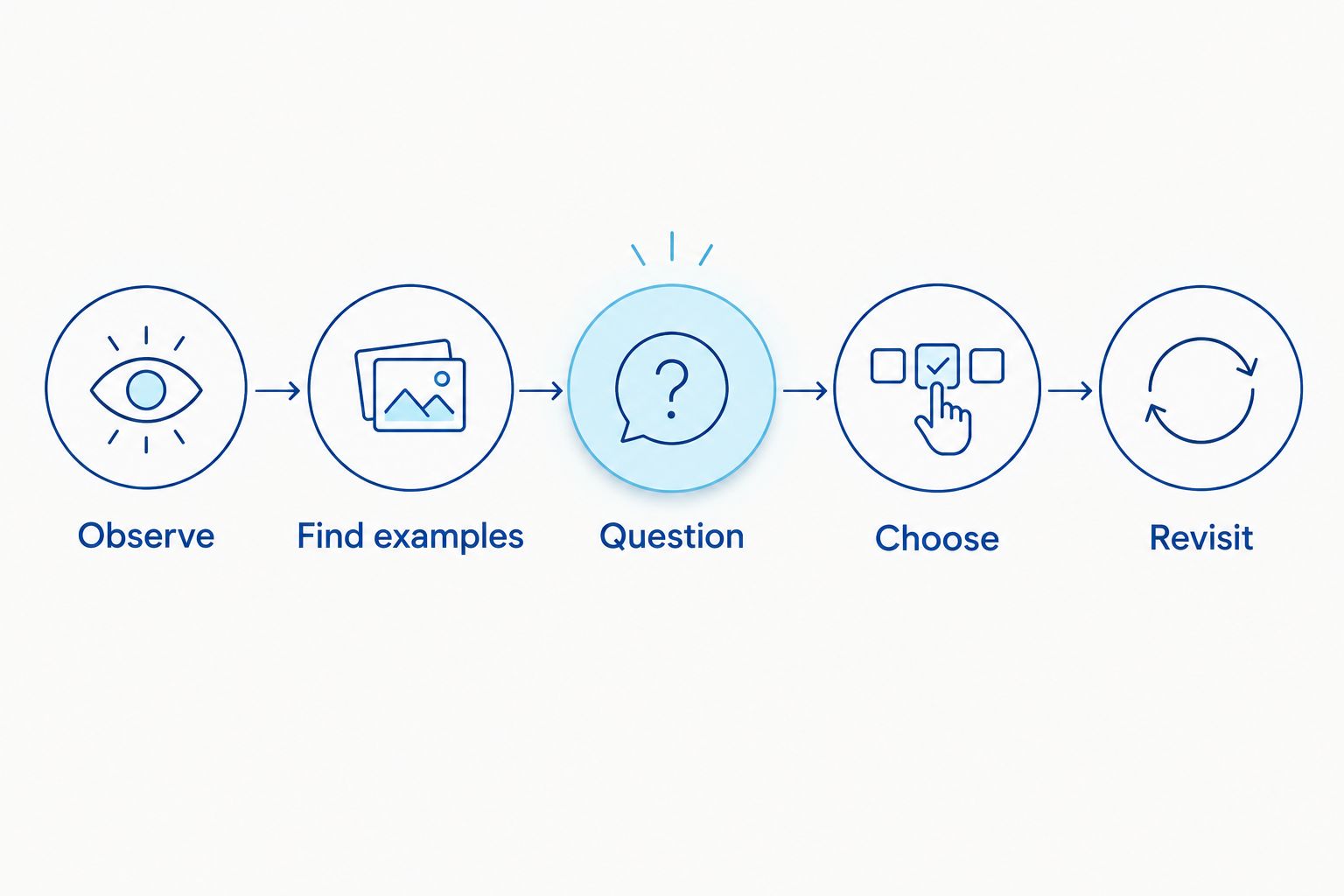
How to turn a personal diagram into a useful next step
A diagram becomes useful through the questions you bring to it. The following exercise is an optional reflection method, not an official scoring procedure or a validated intervention.
Give yourself 5 minutes and keep the task small:
- Observe: Choose one pattern in your diagram that catches your attention. Describe it without calling it good or bad.
- Find examples: Write 2 recent examples from everyday life. Include a situation where the interpretation fits and one where it does not.
- Question: Ask what the pattern helped you manage and what it left unattended.
- Choose: Select 1 small action you can try, such as asking for time before agreeing to a request.
- Revisit: Return after the relevant situation and describe what actually happened.
For a relationship conversation, each person can describe their own example before interpreting the other person. Ask, “What happens between us when I withdraw and you push for an answer?” Avoid, “Our diagrams prove we are incompatible.”
For facilitators, the same boundary matters. Invite disagreement, leave room for context and let the person decide which interpretation is useful. A reflective framework should widen the conversation, not give the facilitator authority over someone’s identity.
How these frameworks were ranked
The 2026 ranking prioritizes research foundations, evidence for the proposed structure and restraint about what scores mean. The named research sources support the distinctions between broad trait measurement, preference categories and motivational interpretations; they do not provide a single universal league table.
The lower positions do not mean that reflective conversations lack value. They mean that personal resonance and spiritual usefulness should not be presented as evidence of scientific validation.
No one-to-one translation is assumed between trait scores, Enneagram types and a spiritual diagram. Shared words such as “balance” or “openness” do not establish equivalence between models.
Which personality framework should you choose?
For a research-oriented starting point in 2026, choose an established Big Five questionnaire. Choose HEXACO when its treatment of Honesty–Humility fits your question.
If you want spiritual reflection, use a personal diagram to examine experience rather than replace evidence. You can keep a trait profile and a reflective practice alongside each other without pretending that they measure the same thing.
Before taking any quiz, finish this sentence: “I want this result to help me…” A clearer purpose makes it easier to recognize both a useful answer and an overclaim.
FAQ
Which personality framework has the strongest scientific support here?
The Big Five is the strongest general starting point among the frameworks compared here for research-backed trait description. Evidence still depends on the specific questionnaire and intended use.
Is Archegram a scientifically validated personality test?
Archegram should not be presented as a scientifically validated psychological or diagnostic assessment. Its 24-question quiz and personal diagram support reflection within a spiritual framework.
Is HEXACO better than the Big Five?
HEXACO is the more relevant choice when you specifically want to examine Honesty–Humility within a broad trait model. The Big Five remains a strong default for general trait description; the right choice depends on your question.
Does recognizing myself in a personality description prove it works?
No, personal recognition does not establish scientific validity. Ask whether the particular questionnaire has evidence for reliability, its proposed interpretation and the use you have in mind.
Can a personal diagram tell me whether a relationship will work?
No, a personal diagram cannot guarantee compatibility or predict a relationship’s outcome. Use it to discuss interaction patterns, differing needs and possible conflicts without turning interpretations into verdicts.
Are feminine and masculine energies fixed gender roles?
No, this spiritual model treats feminine and masculine as receptive and active energies available to anyone. They are reflection terms, not rules about gender or how someone should behave.
Can coaches use spiritual frameworks responsibly?
Coaches can use spiritual frameworks as optional prompts for reflective conversations while clearly explaining their limits. They should not present interpretations as diagnoses, validated psychological findings or guaranteed outcomes.
One last thing
Before accepting a result, ask: “What would make me question this interpretation?” If no example could change your mind, the framework has stopped being a reflection tool and become a fixed story.
With Archegram, keep the diagram open to revision. Understanding yourself does not require settling on a permanent label; it requires enough clarity to choose your next step.
Related guides
- Perception, connection and response
- How archetypes relate to one another
- Compensation in a personal diagram
