


Best overall: the pattern-to-choice prompts. Best for emotional overwhelm: the present-moment prompts. Best simple starting point: the daily balance prompts. These journaling prompts for spiritual awakening use Archegram as a self-regulation framework, helping you connect reflection with everyday choices in 2026 rather than chase a particular spiritual experience.
- Archegram suits adults seeking spiritual self-understanding through self-regulation, not diagnosis.
- The best journaling prompts for spiritual awakening connect recurring patterns with a practical next choice.
- Choose present-moment prompts when reflection feels overwhelming; choose relationship prompts when a difficult interaction keeps returning.
- Treat archetypes and your personal diagram as reflection tools, never fixed identities or proof of spiritual progress.
Why this matters
A meaningful journal entry does not need to explain your whole life. It can simply help you notice what happened, what you felt, and what you want to do differently.
Archegram is a contemporary, non-dogmatic adaptation of ancient Tantric knowledge developed at Samma Karuna. Also called Tantragram, it uses archetypes and a personal visual diagram to support reflection on strengths, recurring patterns and developmental needs. Its spiritual interpretations are distinct from established psychological research; its quiz is not a validated diagnostic assessment.
For this 2026 guide, spiritual awakening means exploring your experience and assumptions, not reaching a measurable spiritual rank. The practical question is whether your reflection gives you a clearer choice in ordinary life.
What makes the best journaling prompts for spiritual awakening?
The strongest prompts for this model meet these criteria:
- Everyday relevance: Start with an actual conversation, decision or reaction rather than an abstract spiritual ideal.
- Self-regulation focus: Explore how you respond, not just which archetype seems to describe you.
- Flexible interpretation: Leave room for context, contradiction and changing circumstances.
- Manageable scope: Give one entry a clear purpose instead of demanding a complete personal explanation.
- Practical closure: Finish with an action, a boundary, a question or permission to stop.
These are selection criteria for the exercises below, not evidence that one prompt produces better psychological outcomes than another.
The prompt sets at a glance
The six sets below are original reflection exercises for exploring the model. They are not official quiz questions or a substitute for diagram interpretation.
| Rank and prompt set | Best for | Standout feature | Key limitation |
|---|---|---|---|
| 1. Pattern to choice | Recurring reactions | Links a specific pattern with an alternative response | Can become repetitive analysis |
| 2. Present moment | Feeling overwhelmed by reflection | Keeps attention on what is happening now | Does not explore a pattern's wider history |
| 3. Daily balance | Starting a regular practice | Gives a short entry a clear ending | Offers less depth than a focused exploration |
| 4. Receptive and active | Exploring effort and openness | Examines two energies without assigning gender roles | Can become an overly simple either-or story |
| 5. Relationship dynamics | Reflecting after a difficult interaction | Separates observation from interpretation | Cannot reveal another person's inner experience |
| 6. Reading into practice | Integrating spiritual ideas | Tests an interpretation against everyday experience | Depends on questioning the source material |
1. Pattern to choice: best for recurring reactions
The pattern-to-choice prompts are the best default when the same kind of reaction keeps returning. Use your personal diagram as a starting point for questions about that reaction, not as an explanation that overrides what happened.
Imagine agreeing to another task while already feeling stretched. Instead of deciding that an archetype makes you behave this way, explore the moment when saying yes became easier than expressing a limit.
Prompts to try
- What happened, and what did I actually say or do?
- What feeling or need was difficult to acknowledge?
- Which interpretation of my diagram seems relevant, and what does it leave out?
- What was my response trying to protect or achieve?
- What alternative response would better respect my needs and the situation?
Pattern-to-choice pros:
- Keeps the reflection connected to an observable event.
- Makes room for both a strength and its limitations.
- Ends with a choice you can describe plainly.
Pattern-to-choice cons:
- Can turn into repeated analysis without action.
- Encourages confirmation bias if you only collect examples that fit your diagram.
Best for: A recurring response you want to understand more clearly.
Verdict: Choose this first when you can name a specific pattern but do not yet know what to try instead.
2. Present moment: best when reflection feels overwhelming
The present-moment prompts narrow the task. Rather than interpreting your whole diagram, describe your current experience and decide whether continuing to write feels appropriate.
Within Archegram, self-understanding supports greater everyday balance; it does not require completing an interpretation while distressed. Leaving an entry unfinished is an option, not a failure of spiritual commitment.
Prompts to try
- What can I describe about my experience without explaining its cause?
- Which words fit right now: tense, tired, uncertain, disappointed, or something else?
- What am I asking myself to solve immediately?
- What can remain unanswered today?
- Do I want to keep writing, pause, or speak with someone I trust?
Present-moment pros:
- Does not require familiarity with archetype terms.
- Gives permission to pause interpretation.
- Keeps the entry focused on your present capacity.
Present-moment cons:
- Does not establish why a recurring pattern developed.
- Can become avoidance if you never return to an important question.
Best for: Moments when a deeper interpretation feels like too much.
Verdict: Choose this before deeper exploration when the journal itself starts to feel like another demand. These prompts are a reflective option, not treatment or crisis support.
3. Daily balance: best for a simple starting point
The daily balance prompts connect the model with ordinary decisions. They ask where your day felt workable, where it felt strained, and what deserves your attention next.
Try a 5-minute session as an optional writing boundary. The duration is a suggested limit, not a claim about how long self-regulation takes or when benefits should appear.
Prompts to try
- Where did I feel able to respond rather than react today?
- Where did I push past a limit or withdraw from something important?
- Which strength supported me, and where did I rely on it too heavily?
- What is one adjustment I want to explore tomorrow?
Daily balance pros:
- Gives a beginner a clear place to start.
- Includes strengths rather than focusing only on difficulties.
- Makes the connection between reflection and daily life explicit.
Daily balance cons:
- A brief entry can miss important context.
- A daily schedule can become another standard to judge yourself against.
Best for: Building a manageable practice without interpreting every part of your diagram.
Verdict: Choose this for simplicity. Write 2 closing sentences: one describing what you noticed, and one naming your next step. Skip the schedule whenever it becomes more important than the reflection.
4. Receptive and active: best for exploring effort and openness
The receptive-and-active prompts explore how you make room for experience and how you act on it. In this framework, feminine and masculine refer to receptive and active energies available to anyone, not biological categories or prescribed gender roles.
A quiet response is not automatically receptive, and a busy response is not automatically balanced action. Look at what your behaviour does in context before applying an interpretation.
Prompts to try
- Where am I listening carefully, and where am I withholding my voice?
- Where am I taking responsibility, and where am I trying to control everything?
- What would openness look like in this situation?
- What would a clear, respectful action look like?
- Am I assigning a gendered expectation to something anyone can experience?
Receptive-and-active pros:
- Gives you two perspectives on the same situation.
- Questions assumptions about effort and passivity.
- Leaves room for both listening and decisive action.
Receptive-and-active cons:
- Can oversimplify a complex situation into two categories.
- Requires care not to reinforce gender stereotypes.
Best for: Exploring a tension between pushing harder and making more space.
Verdict: Choose this as a question, not a classification. You do not need to decide which energy you permanently are.
5. Relationship dynamics: best after a difficult interaction
The relationship-dynamics prompts keep the model focused on your contribution to an interaction. They do not use someone else's presumed archetype to explain their motives or predict compatibility.
For example, a delayed reply is an observation. The conclusion that someone does not care is an interpretation. Write those separately before considering what your diagram brings to the reflection.
Prompts to try
- What could both people agree actually happened?
- What meaning did I add to the event?
- What feeling or expectation did I bring into the conversation?
- Which part is mine to communicate, and which part is not mine to decide?
- What question could I ask rather than answering it for the other person?
Relationship-dynamics pros:
- Distinguishes events from the meaning you give them.
- Keeps responsibility attached to your own choices.
- Creates space for clarification rather than assumed compatibility.
Relationship-dynamics cons:
- Your journal contains only your perspective.
- Reflection cannot make another person communicate respectfully.
Best for: Preparing to revisit a misunderstanding without treating the model as a verdict on someone else.
Verdict: Choose this to prepare a conversation, not to replace one. A diagram does not establish another person's intentions or remove the need for boundaries.
6. Reading into practice: best for integrating spiritual ideas
The reading-into-practice prompts connect spiritual language with an event you can describe. They are particularly relevant when a passage seems meaningful but you are unsure what it changes in your understanding of the model.
Journaling with spiritual books belongs in this practice as a conversation with an idea, not automatic agreement with its author. A passage can raise a valuable question without becoming an instruction you must follow.
Prompts to try
- What does this passage say in plain language?
- Is it offering a spiritual interpretation, a personal opinion, or a research claim?
- How does it relate to a specific pattern I am exploring through my diagram?
- What part fits my experience, and what part does not?
- What 1 action could I try without treating the passage as unquestionable truth?
Reading-into-practice pros:
- Makes abstract language easier to examine.
- Encourages disagreement and independent interpretation.
- Connects reading with a concrete reflective purpose.
Reading-into-practice cons:
- A journal entry cannot establish whether a research claim is valid.
- Interpretation can drift away from the model into unrelated spiritual speculation.
Best for: Readers who want to connect an idea with self-regulation rather than collect inspiring quotations.
Verdict: Choose this when a passage raises a real question. Skip passages that pressure you to distrust your own limits or accept unsupported promises.
Turn a journal entry into a small experiment
Archegram self-regulation journaling is best suited to adults who want spiritual reflection tied to everyday choices. You do not need a dramatic insight before trying a different response.
Use this sequence after any prompt set:
- Notice: Describe the event without assigning an archetype.
- Interpret: Consider what your diagram suggests, including what does not fit.
- Choose: Name a small response you want to explore.
- Review: Return after the situation develops and describe what actually happened.
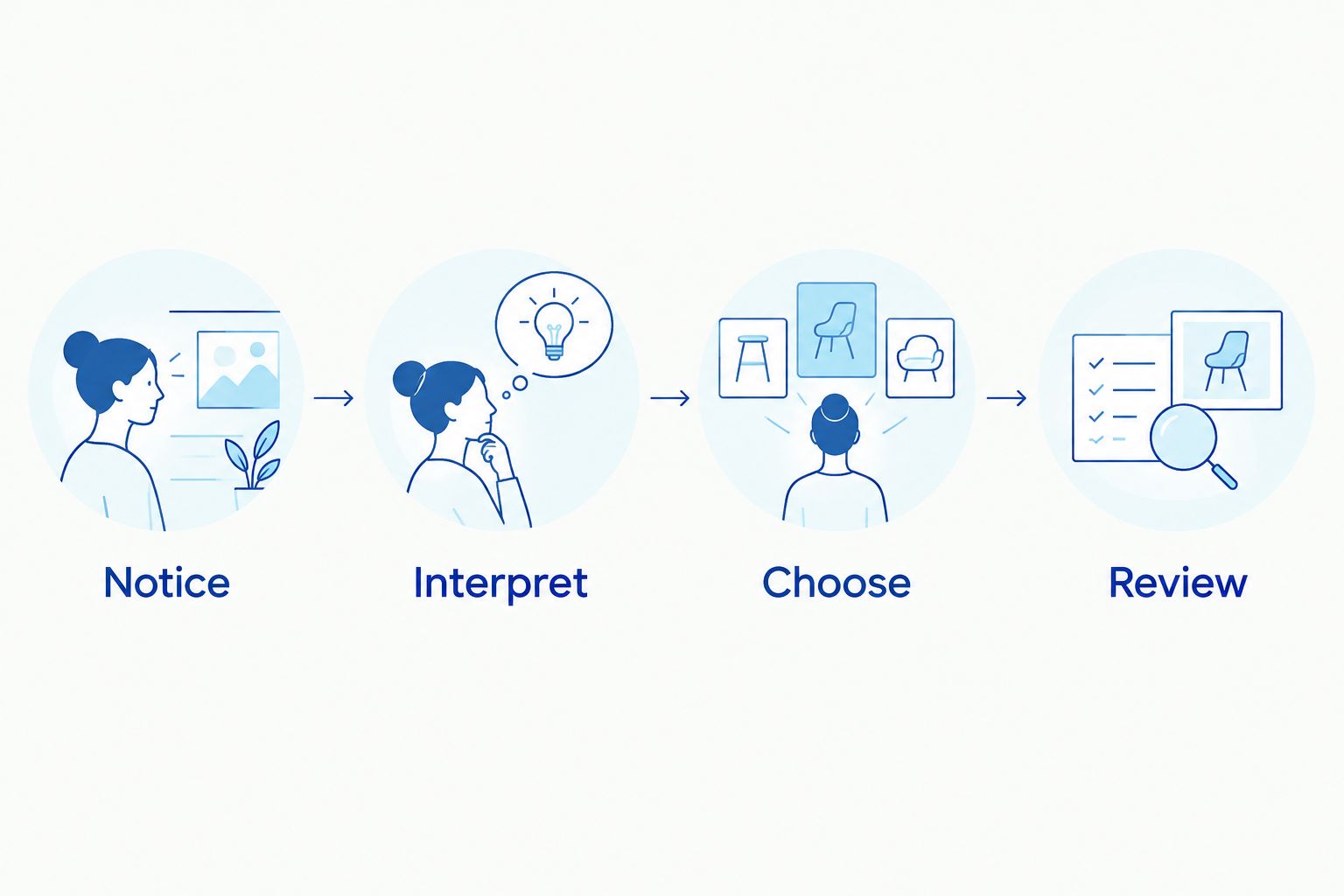
For example, you might notice that you agreed too quickly, consider your familiar coping pattern, choose to ask for thinking time, and later review the conversation. This is a suggested exercise, not a reported result or a guarantee.
How these prompts were ranked
This 2026 ranking prioritizes everyday relevance, self-regulation, flexible interpretation, manageable scope and practical closure. Pattern to choice comes first because it directly connects a recurring response with an alternative; daily balance is the simpler entry point.
The ranking reflects those stated editorial criteria, not comparative testing or scientific validation. Choose a lower-ranked set whenever its purpose fits your situation better.
Which prompts should you choose?
Start with pattern to choice in 2026 if you already recognize a recurring reaction. Choose daily balance if you want a smaller entry, or present moment if interpretation feels demanding.
If you have not explored the model, Archegram offers a free 24-question quiz and personal visual diagram. Treat the result as material for reflection, not a diagnosis, fixed identity or score of spiritual maturity.
FAQ
What are the best journaling prompts for spiritual awakening?
Pattern-to-choice prompts are the best default in this guide because they connect a recurring reaction with a practical alternative. Start with what happened, what you felt, and what you want to try differently.
How do I use a personal diagram in my journal?
Use your personal diagram to generate questions about a specific experience. Record both what fits and what does not, rather than making the experience conform to the diagram.
Is the Archegram quiz a psychological assessment?
No. The quiz is a spiritual self-reflection resource, not a validated diagnostic assessment. Its interpretations should not be presented as clinical findings.
How long should I spend on a journal entry?
Try a 5-minute writing boundary if you want a manageable starting point. This is an optional exercise limit, not an evidence-based dose or a requirement.
Can I journal without knowing my archetypes?
Yes. Begin with an everyday event, describe your response, and name a question or next step. Familiarity with archetype terms is not required for those exercises.
Should I use my partner’s archetype to explain a disagreement?
No. Reflect on your observations, assumptions and contribution instead of using a presumed archetype to explain someone else’s motives. Relationship interpretations do not predict compatibility.
What if journaling makes me feel more overwhelmed?
Stop or shorten the exercise rather than forcing an interpretation. You can leave a question unanswered; journaling and the model are not substitutes for appropriate professional support.
One last thing
For your 2026 journal, leave space for this sentence: What would make me reconsider this interpretation? A useful diagram invites curiosity about your experience; it does not require you to defend a label when your experience changes.
Related guides
- Perception, connection and response
- Archetype interdependence
- Compensation in a personal diagram
- Personality frameworks ranked by scientific validation
