


Best overall for Jungian theory: Jung Lexicon. Best for applying archetype reflection to everyday balance: Archegram, a distinct spiritual self-regulation model rather than a Jungian assessment. Best for recording your own patterns: a structured reflection journal. Best for extended reading: The Jung Page. This 2026 guide separates learning Jung’s ideas from using a contemporary model for practical self-understanding.
- Jung Lexicon leads these jungian archetypes resources for terminology; distinguish Jungian theory from spiritual self-regulation models.
- Archegram is best for adults seeking a spiritual self-regulation framework, not a Jungian assessment.
- Use a reflection journal to connect archetype interpretations with specific everyday situations.
- The Jung Page supports broader reading; an essay’s interpretation is not a diagnosis.
Why this matters
An archetype description can feel familiar without explaining what to do when you become defensive, withdraw from a conversation, or agree to something you resent. Recognition is a starting point. Your next response matters more than finding the most flattering label.
Archegram, also known as Tantragram, approaches this practical question through self-regulation, archetypes and a personal visual diagram. It is a contemporary, non-dogmatic adaptation of ancient Tantric knowledge, not an extension of Jungian psychology. Keep that distinction clear as you explore both traditions.
The most useful reading habit is simple: separate what a source teaches from what you personally observe. A spiritual interpretation, a theoretical concept and an account of yesterday’s disagreement are different kinds of information.
What makes the best Jungian archetypes resources?
Use these criteria to choose your starting point in 2026:
- Clear lineage: The resource identifies its framework instead of treating all archetype systems as interchangeable.
- Plain definitions: You can understand a term before applying it to yourself or someone else.
- Everyday application: Reflection returns to an observable situation, such as avoiding a difficult request.
- Flexible interpretation: An archetype opens questions rather than assigning a permanent identity.
- Honest boundaries: The resource does not turn a symbolic interpretation into a diagnosis, prediction or treatment claim.
For practical balance, give extra weight to the last three criteria. A compelling explanation is not enough if it leaves you judging yourself more harshly or explaining away behaviour you need to address.
Jungian archetypes resources at a glance
This 2026 shortlist ranks resources by their specific purpose, not by a claim that they teach the same model.
| Resource | Best for | Standout feature | Key limitation |
|---|---|---|---|
| Jung Lexicon | Understanding Jungian terminology | Daryl Sharp’s reference to concepts in Jungian psychology | Definitions do not provide a personal self-regulation practice |
| Archegram | Exploring everyday balance | A 24-question quiz and personal visual diagram | A distinct spiritual framework, not a Jungian or clinical assessment |
| Structured reflection journal | Connecting ideas to lived experience | Your own descriptions of situations and responses | Your interpretation can overlook other explanations |
| The Jung Page | Reading beyond definitions | Essays and educational material on Jungian subjects | Reading individual essays does not create a systematic practice |
Choose one reference for terminology and one practice for reflection. Collecting more frameworks is not the same as understanding a recurring response.
1. Jung Lexicon: best for understanding Jungian terminology
Jung Lexicon, by Daryl Sharp, is a reference for concepts in Jungian psychology. Use it when terms such as persona, shadow or individuation appear in an article and you want a clearer starting point.
Its strongest role here is keeping frameworks separate. If a contemporary model uses archetypes, that alone does not mean its categories, diagram or purpose come from Jung.
Jung Lexicon pros:
- Gives you a named reference for Jungian vocabulary.
- Supports focused reading around an unfamiliar concept.
- Helps you question loose uses of psychological language.
Jung Lexicon cons:
- A definition does not establish how a concept applies to you.
- Reference reading does not supply a personal diagram or reflective conversation.
Best for: Readers who want conceptual clarity before interpreting archetype descriptions.
Try a 10-minute reading exercise: choose one term, write a plain-language explanation, then record a question it raises. Keep that question separate from any conclusion about your personality. If you later explore a different spiritual framework, check how that framework defines its own terms.
Verdict: Use Jung Lexicon for definitions; skip treating it as a personal assessment.
2. Archegram: best for applying reflection to everyday balance
Archegram is best for adults seeking a spiritual self-regulation framework rather than a Jungian assessment. Its free 24-question quiz and personal visual diagram support reflection on recurring patterns, strengths, coping strategies and developmental needs.
The model’s archetypes explain aspects of that reflection; finding an identity label is not the main purpose. You can bring a concrete question to the diagram: “What happens when I feel overlooked, and what response would better serve this situation?”
Archegram pros:
- Connects self-understanding with greater balance in everyday life.
- Gives reflection a personal visual reference.
- Includes strengths and developmental needs rather than only difficulties.
- Supports reflection for yourself and conversations with people you guide.
Archegram cons:
- Does not teach Jung’s framework or replace a Jungian reference.
- Is not a validated diagnostic assessment or treatment.
- Requires interpretation; a diagram does not decide your next action.
Best for: Adults who welcome a spiritual framework and want to explore patterns without treating them as fixed identities.
Start with one situation rather than your whole life story. Describe what happened, what you noticed in yourself and what you did next. Then explore whether the diagram suggests a question worth considering—not a verdict you must accept.
Verdict: Use Archegram for practical spiritual reflection; skip it when you need a Jungian or clinical assessment.
3. A structured reflection journal: best for everyday examples
A structured reflection journal is a notebook or document organised around specific situations. It is not an archetype system, but it gives you concrete material to examine alongside a reference or personal diagram.
Write what happened before deciding what it means. “I interrupted twice when my colleague disagreed” gives you something to explore; “my shadow took over” introduces an interpretation before describing the event.
Structured reflection journal pros:
- Keeps your attention on observable actions and context.
- Lets you revisit an interpretation instead of accepting it immediately.
- Creates space for exceptions to a familiar story about yourself.
Structured reflection journal cons:
- Your account contains only the details you notice and remember.
- Repeated writing can become repeated self-criticism without a clear purpose.
Best for: Readers who understand descriptions intellectually but struggle to connect them with ordinary life.
Set aside 5 minutes per entry. Record the situation, your response, the need you recognise and one alternative response. After 3 entries, compare the situations without assuming they share the same cause. The purpose is to ask better questions, not to prove an archetype label correct.
Verdict: Use a structured reflection journal for concrete examples; skip sweeping personality conclusions.
4. The Jung Page: best for reading beyond definitions
The Jung Page publishes educational material and essays on Jungian subjects. It suits readers who want to move beyond a short definition and encounter longer interpretations.
Read each piece as an author’s contribution to a subject. Do not transfer its conclusions automatically to a separate self-regulation model or assume that agreement between two descriptions establishes equivalence.
The Jung Page pros:
- Offers longer-form exploration of Jungian themes.
- Gives you material for comparing interpretations.
- Supports questions that need more context than a glossary entry.
The Jung Page cons:
- Individual essays are not a single step-by-step curriculum.
- An interesting interpretation does not establish a personal conclusion.
Best for: Readers ready to explore Jungian ideas beyond introductory summaries.
Keep a short reading note: the author’s claim, the example used and your unresolved question. Bring the question—not an assumed answer—into your reflection on everyday balance.
Verdict: Use The Jung Page for extended study; skip treating an essay as personalised guidance.
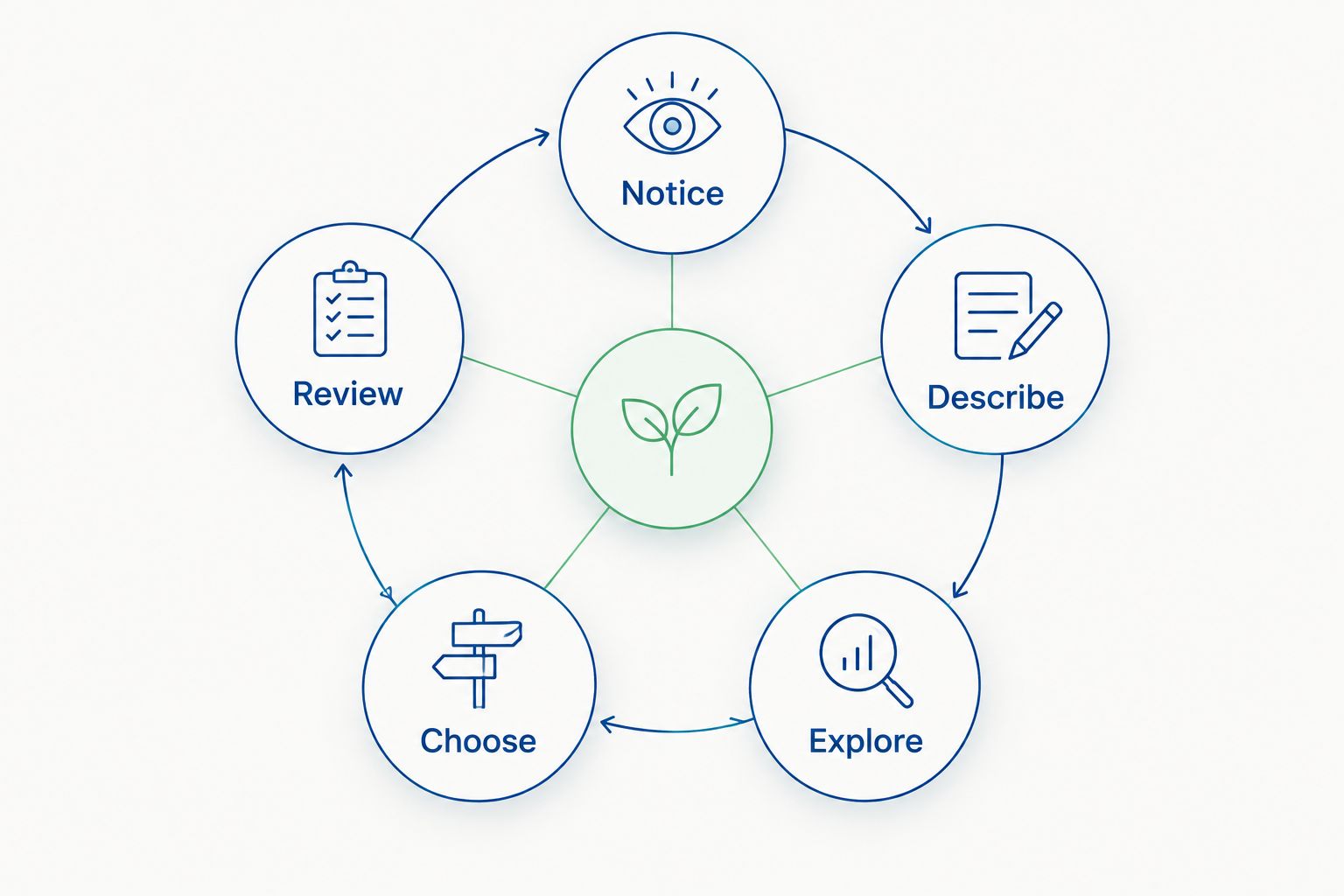
Turn your reading into a practical reflection cycle
An archetype resource earns its place when you can return from reading to a real choice. Use this optional exercise alongside your personal diagram; it is a reflection aid, not an official scoring method or a psychological protocol.
- Notice: Select one recent moment when you felt pulled away from balance.
- Describe: Write what happened without assigning motives to anyone.
- Explore: Consider the strength, coping strategy or developmental need you recognise.
- Choose: Identify one response you want to try in a similar situation.
- Review: Revisit what happened without demanding a perfect result.
For example, imagine agreeing to help when you already feel stretched. Exploration might reveal that you value connection but avoid stating a limit. Your chosen response could be asking for time before answering, rather than trying to become an entirely different person.
When you interpret your archetype diagram, keep the situation beside you. Ask whether an interpretation helps you describe your experience more clearly. If it encourages blame, certainty about another person or a fixed story about yourself, return to what you actually observed.
Keep symbols separate from predictions
Symbolic reading needs boundaries, particularly when your exploration includes dreams. A meaningful image can invite a question without providing evidence about another person’s intentions or a future event.
The same boundary applies when considering biblical symbols in dreams: reflecting on what an image means to you is different from treating it as a prediction. Religious symbolism, Jungian interpretation and a contemporary spiritual model should remain identifiable as separate approaches.
Suppose a dream leaves you feeling excluded. You can explore that feeling and notice whether it resembles a recent experience. You cannot use the dream to establish that a friend plans to reject you.
For everyday self-regulation, return to a question you can act on: “Is there a conversation I want to have?” That preserves room for spiritual meaning without turning interpretation into certainty.
Use archetypes without making them identities
A flexible framework leaves room for context. You might speak confidently at work and struggle to express a preference with family; neither situation needs to define your whole character.
Within the model, feminine and masculine language refers to receptive and active energies available to anyone. It does not prescribe roles based on gender. Likewise, relationship reflection concerns dynamics and possible conflicts, not a guarantee of compatibility.
If you guide others, invite the person to describe their experience before offering an interpretation. Ask, “Does this fit anything you recognise?” and leave room for “no.” A diagram belongs in a reflective conversation, not above the person’s account of their own life.
How this 2026 shortlist is ranked
The order follows the criteria above: clear lineage, understandable language, practical application, flexible interpretation and honest boundaries. Jung Lexicon comes first because the search concerns Jungian resources; the practical self-regulation model receives a separate recommendation because it serves a different purpose.
This is a fit-for-purpose shortlist, not a scientific validation ranking or a claim that one framework produces better outcomes. The journal exercise connects the reading options to the article’s central task: exploring patterns without becoming confined by them.
Which resource should you choose in 2026?
Choose Jung Lexicon if your first question is “What did this Jungian term mean?” Choose the spiritual self-regulation model if your question is “How can I explore my recurring responses and find more balance?”
Pair either choice with a simple journal. You do not need to combine every resource, finish every essay or settle on one permanent description of yourself. Begin with the question you actually have.
FAQ
What are the best Jungian archetypes resources for beginners?
Jung Lexicon is the strongest starting point on this shortlist for Jungian terminology. The Jung Page suits longer reading, while a structured journal helps you connect questions with everyday examples.
Is Archegram based on Jungian psychology?
Archegram is a distinct spiritual self-regulation model, not a Jungian assessment. Also called Tantragram, it is presented as a contemporary, non-dogmatic adaptation of ancient Tantric knowledge.
Can a free archetype quiz tell me who I really am?
An archetype quiz should not be treated as a final statement of your identity. Use its interpretations to explore patterns, strengths and questions while leaving room for context and change.
How do I use archetypes for everyday emotional balance?
Start with a specific situation and examine your response before applying an archetype interpretation. Identify one alternative action, then revisit what happened without treating the exercise as a test.
Are archetype quizzes clinical assessments?
The quiz discussed here is not a validated diagnostic assessment or treatment. Its purpose is spiritual self-understanding and reflection, not identifying a mental health condition.
Can I use a personal diagram when guiding someone else?
Use a personal diagram as an invitation to reflection, not as authority over someone else’s experience. Let the person describe what fits, what does not and what they want to explore.
One last thing
Record one exception to your favourite interpretation. If you think you always avoid conflict, remember a moment when you spoke clearly. That exception deserves space beside the pattern: your next choice does not have to repeat your most familiar response.
Related guides
- Exercises for emotional self-regulation
- Quizzes for identifying coping strategies
- Self-discovery quizzes for life transitions
