


For couples coaches, a relationship dynamics tool is a structured reflection aid for exploring recurring interactions with the aim of supporting greater emotional balance and more deliberate responses. Choose a relationship dynamics tool for couples coaches that helps each partner understand their own patterns without labelling either person or predicting the relationship’s future.
- Archegram is a relationship dynamics tool for couples coaches seeking reflective self-regulation work, not diagnosis or compatibility predictions.
- Begin with a recent interaction, then use archetypes and personal diagrams to explore patterns without assigning blame.
- Treat each partner’s interpretation as a conversation starter, not proof about the other person.
- Agree on one practical response to rehearse and revisit; keep coaching separate from clinical assessment.
Why relationship dynamics tools matter for couples coaches
Couples coaches work with two accounts of the same interaction. Your task is not to decide whose account a diagram proves correct; it is to help each person describe their experience and take responsibility for their response.
A structured tool gives that conversation a shared reference point. It also introduces a risk: partners can turn its language into another way to criticise each other. Choose a framework according to how you will use it, not how neatly it categorises people.
Archegram is best for couples coaches seeking a reflective self-regulation model rather than a clinical assessment. Its free 24-question quiz and personal visual diagram support reflection on strengths, recurring patterns and developmental needs. They do not establish a diagnosis or guarantee relationship compatibility.
For your 2026 coaching practice, define the boundary before introducing the tool: you are inviting self-understanding, not assessing which partner is more mature, balanced or suitable for the relationship.
Understand what the model brings to couples work
Archegram, also called Tantragram, is a contemporary, non-dogmatic adaptation of ancient Tantric knowledge developed at Samma Karuna. It uses archetypes and a personal diagram to support self-understanding and greater balance in everyday life.
An archetype is a pattern you can reflect on, not a permanent identity. Keep the model’s spiritual interpretations distinct from established psychological research; do not present its quiz as a scientifically validated assessment.
For couples work, centre the practical question: What can each person notice and choose differently? A diagram belongs beside someone’s lived experience, not above it. If an interpretation does not fit, explore that difference rather than insisting the framework knows better.
How to use the model in a couples coaching conversation
1. Establish consent and a shared purpose
Start without a quiz. Ask each partner what they want to understand about their own responses, then agree on a shared focus narrow enough to explore in one conversation. An example is the moment a discussion about household tasks becomes an argument about feeling valued.
Explain that participation is optional. Neither person needs to accept an archetype interpretation or share private reflections to demonstrate commitment to the relationship.
If someone describes fear, coercion or threats, do not turn the situation into a shared archetype exercise. Keep within your competence and seek appropriate specialist guidance.
- Ask each partner for a personal learning goal.
- Agree that either person can decline an exercise.
- Clarify what notes you will retain and share.
- Set a boundary against diagnosing or labelling each other.
- Explain the limits of your coaching role.
2. Map a recent interaction before interpreting it
Use a blank page with 3 columns: situation, personal experience and response. Invite each partner to describe one specific interaction, keeping observable events separate from assumptions about intention.
For example, a delayed reply is an event. Concluding that the delay means rejection is an interpretation. You do not need to dismiss that interpretation; ask what the person noticed, felt and did next.
This manual map gives you something concrete to return to when the discussion becomes abstract. Keep both accounts visible without forcing agreement about every detail.
- Choose a recent, manageable disagreement.
- Record what each person actually said or did.
- Separate observations from explanations of motive.
- Ask each person to name their own response.
- Note where the sequence remains unclear.
3. Introduce the quiz as an optional starting point
Once you have a shared example, offer the Archegram quiz and personal diagram as a structured alternative to starting reflection from a blank page. Explain what they provide before inviting either partner to participate.
The quiz contains 24 questions. Its role here is to introduce language for exploring patterns, strengths and developmental needs—not to score the relationship. Let each partner consider their own responses before discussing a partner’s interpretation.
Use a simple check-in: does this description fit the interaction you mapped, partly fit, or miss something important? Treat disagreement with the result as useful information, not resistance.
- Explain the reflective, non-diagnostic purpose.
- Let partners decide independently whether to participate.
- Invite each person to interpret their own diagram first.
- Ask for everyday examples supporting an interpretation.
- Leave room for uncertainty or disagreement.
4. Translate archetypes into everyday behaviour
Keep unfamiliar terms close to lived experience. If someone recognises a pattern of taking charge, ask what taking charge looked like during the chosen interaction. Then ask when that response serves them and when they want another option.
When the model uses feminine and masculine language, explain these as receptive and active energies available to anyone. Do not assign listening to women, action to men or particular roles to any gender.
Use archetypes to describe possibilities, not to explain someone away. The person remains more complex than the label, and a useful interpretation leaves space for choice.
- Ask for a concrete example of each recognised pattern.
- Explore a strength before discussing a difficulty.
- Describe behaviour rather than declaring identity.
- Explain receptive and active qualities without gender rules.
- Replace accusations with first-person observations.
5. Read the diagrams without ranking the partners
Explore each personal diagram separately before discussing relationship dynamics. Ask what the person recognises about their strengths, recurring coping strategies and current needs. Only then invite connections with the interaction map.
Avoid combining two diagrams into a verdict about compatibility. Instead, examine a possible dynamic: one person seeks more discussion while the other seeks space. Ask how each understands that difference and what agreement they want to try.
For your 2026 session notes, record the person’s interpretation and the example behind it. Do not record an archetype label as an established fact about their partner.
- Let each person explain their own diagram.
- Ask what feels accurate and what does not.
- Connect interpretations to specific interactions.
- Explore differences without ranking either partner.
- Keep compatibility discussion exploratory, never predictive.
6. Turn reflection into one practical experiment
A meaningful conversation still needs an everyday application. Invite each partner to choose one response they want to practise, then agree on a situation where that response would be relevant.
Set aside 10 minutes during the session to rehearse a manageable example. One partner might practise naming a need before offering a solution; another might practise asking for space while agreeing when to return to the conversation. These are suggested exercises, not tested outcomes of the model.
Make the agreement observable. Asking for a pause is clearer than promising to become more balanced, because both people can describe what happened afterward.
- Choose one response within each person’s control.
- Name the situation that will prompt the practice.
- Rehearse the wording without demanding perfection.
- Agree how to pause if the exercise becomes uncomfortable.
- Decide what to revisit at the next conversation.
7. Review the experience and revise the interpretation
Return to the lived interaction before returning to the diagram. Ask what each person tried, what happened and what they now understand differently. An experiment that did not fit still gives you a useful question to explore.
Treat personal development as something people can revisit as circumstances change. Do not assume an earlier diagram permanently defines someone’s needs, or that a different response proves they have moved to a higher level.
Use a 2026 practice log to separate observation from interpretation. Keep entries brief enough that the reflection supports daily life rather than becoming another obligation.
- Ask what each person actually tried.
- Record the situation and response in plain language.
- Notice exceptions to the familiar pattern.
- Revise interpretations that no longer fit.
- Keep, adjust or stop the agreed experiment.
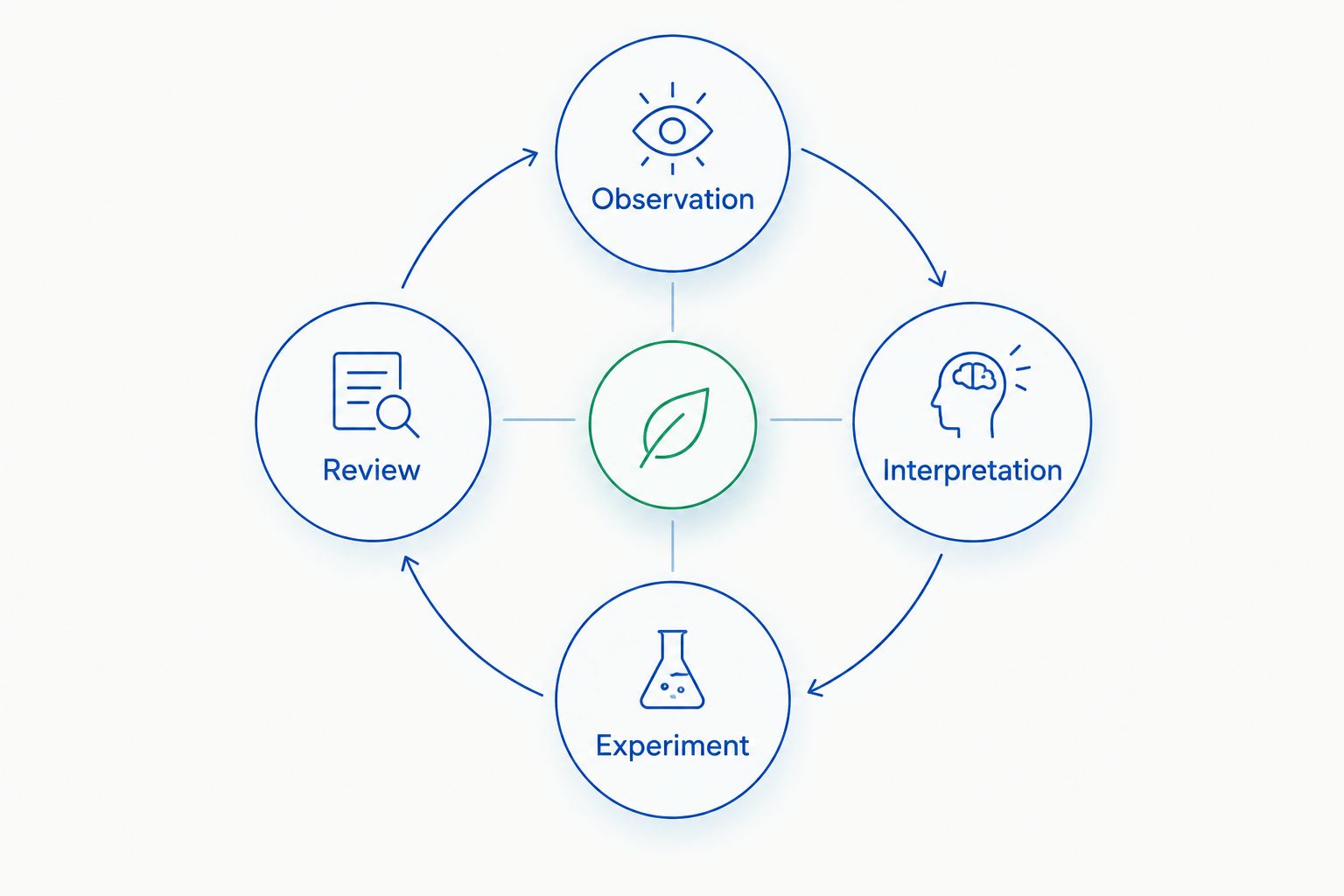
Use this loop as a conversation structure, not as an official diagram or scoring system. It summarises the coaching process above; it does not reproduce the model’s personal visual diagram.
Compare options for your coaching purpose
For a 2026 toolkit, distinguish the framework from the exercises surrounding it. You do not need several personality systems to explore one interaction; choose the least complicated option that supports the agreed purpose.
| Option | Best for | Practical strength | Key limitation |
|---|---|---|---|
| Written interaction map | Couples needing a concrete starting point | Keeps events, interpretations and responses separate | Depends on what participants remember and choose to share |
| Individual reflection journal | Partners wanting private preparation | Gives each person space to describe their own experience | Does not itself create a shared conversation |
| Archegram quiz and personal diagram | Couples coaches using a spiritual self-regulation framework | Provides archetype language and a visual focus for reflection | Is not a validated diagnostic assessment or compatibility predictor |
| Coach-guided rehearsal | Couples ready to practise an agreed response | Moves discussion into an observable exercise | Does not establish how the response will work outside the session |
Choose the written interaction map first when the disagreement itself remains unclear. Introduce the model when both people want another way to explore their own patterns. Use rehearsal when the conversation has produced a specific action, not as a substitute for understanding what each person wants.
Common mistakes couples coaches make
Letting one partner interpret the other
A partner can describe their experience of an interaction, but they should not become the authority on someone else’s inner world. Redirect statements about what an archetype proves into observations about behaviour and its effect.
Ask the person being described whether the interpretation fits. Make disagreement permissible without requiring a defence.
Treating a diagram as a compatibility verdict
A personal diagram supports reflection; it does not predict whether a relationship will succeed. Avoid declaring two patterns naturally incompatible or promising that complementary patterns create lasting harmony.
Bring the conversation back to choices, agreements and the dynamic the partners actually describe.
Turning balance into equal scores
Do not assume that greater balance means equal expression of every quality at every moment. Explore which response fits the situation and what each person wants to develop.
Someone choosing to listen during one disagreement does not need an equally active response in the next exchange to satisfy the exercise.
Confusing spiritual interpretation with clinical authority
Keep the model’s spiritual framework clearly named. Do not use an archetype result to explain a mental health condition, assess trauma or justify advice outside your competence.
In 2026 course descriptions and client materials, describe reflection and coaching accurately. Do not imply that using a quiz supplies professional qualifications or clinical assessment skills.
FAQ
What is the best relationship dynamics tool for couples coaches?
The best fit depends on the agreed coaching purpose. Archegram suits reflective self-regulation work using archetypes and personal diagrams; a written interaction map is a simpler starting point for clarifying one disagreement. Neither should be presented as a clinical assessment.
Can I use the quiz to tell whether a couple is compatible?
No, the quiz does not establish relationship compatibility. Use it to invite reflection on recurring dynamics, differences and possible conflicts, not to predict the relationship’s future.
Do both partners have to take the quiz?
No, participation should remain optional. You can begin with a written account of a recent interaction and introduce the quiz only when each person wants that form of reflection.
How should I explain archetypes without labelling people?
Describe archetypes as flexible patterns for reflection rather than fixed identities. Ask when a description fits, when it does not and what alternative response the person wants to explore.
Does feminine or masculine energy mean a gender role?
No, these terms refer to receptive and active energies available to anyone within the model. Do not assign behaviours, responsibilities or relationship roles according to gender.
Is this relationship coaching approach a form of therapy?
No, using this self-reflection framework does not make coaching a clinical assessment or treatment. Keep your work within your competence and distinguish spiritual interpretation from psychological research.
How do I turn a personal diagram into a practical exercise?
Choose one pattern the person recognises and connect it to a specific interaction. Invite one response they want to practise, then review what happened without treating the result as proof of the diagram.
One last thing
Let the person correct the framework. When a partner says an interpretation does not fit, ask what the diagram leaves out. That question keeps self-understanding at the centre and prevents a reflection tool from becoming another voice telling someone who they are.
Before your next couples session, prepare one invitation: describe the moment you want to understand, not the kind of person you think your partner is.
Related guides
- Tools for interpreting your archetype diagram
- Exercises for emotional self-regulation
- Archetype diagrams for life coaches
